On May 14, HAAFS invited a panel of experts to convene a field observation and control effect evaluation meeting for "Ecological prevention and control techniques of major biennial weeds in wheat fields" at the Luquan Base.
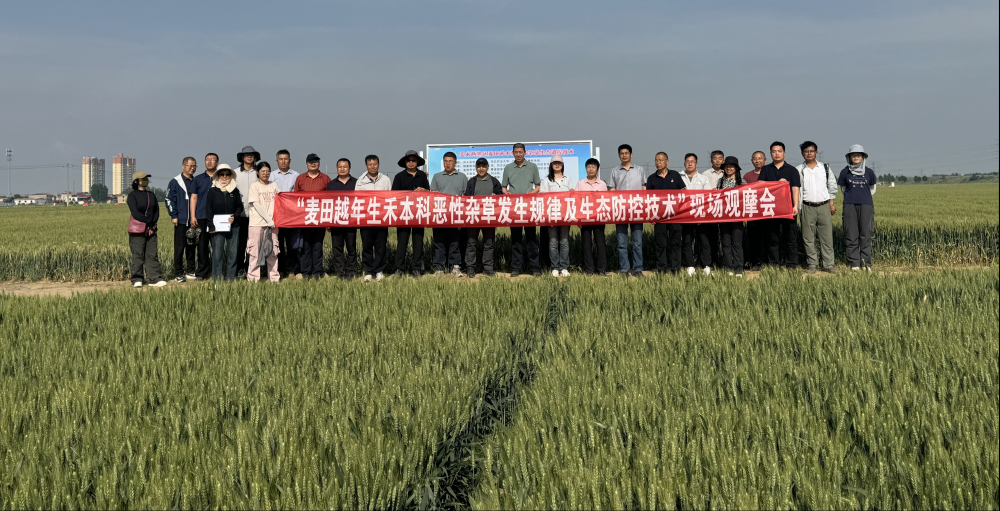
Researcher DONG Zhiping from the Institute of Millet Crops elaborated on the prominent production issues faced by annual grass weeds represented by Aegilops tauschii, Bromus, Alopecurus, and Avena, such as their strong tillering ability, high reproductive coefficient, close relationship with wheat, limited selective herbicides, poor control efficacy, prominent herbicide resistance, and high risk of phytotoxicity. From a biological and ecological perspective, the research team revealed that the main reasons for their calamity are the seeds' ability to repeatedly absorb water, sprout successively, and the difficulty in centralized control. In the field, 94.4% of weed seeds sprout in the 0-5 cm soil layer. In wheat-corn double cropping areas, seeds absorb water and sprout in shallow soil layers with oxygen, while in deep soil layers is lacking of oxygen. The developed ecological regulation technology system of "corn no-tillage sowing + wheat deep tillage sowing" for annual weeds in wheat-corn double cropping areas received unanimous approval from the participants. Subsequently, Researcher DONG Zhiping introduced the 17,000 mu integrated green prevention and control demonstration base for wheat-corn pests and weeds, which has been established since 2017 with ecological prevention and control as the core. This year, 5 tillage methods commonly used in production, including rotary tillage at 10 cm and 15 cm, plow tillage at 20 cm, deep plow at 25 cm and 30 cm, were set up. Thirty-one species of annual and perennial weed seeds were artificially sown in the wheat-corn double cropping area to demonstrate the control effect of different tillage methods on biennial weeds in wheat fields.
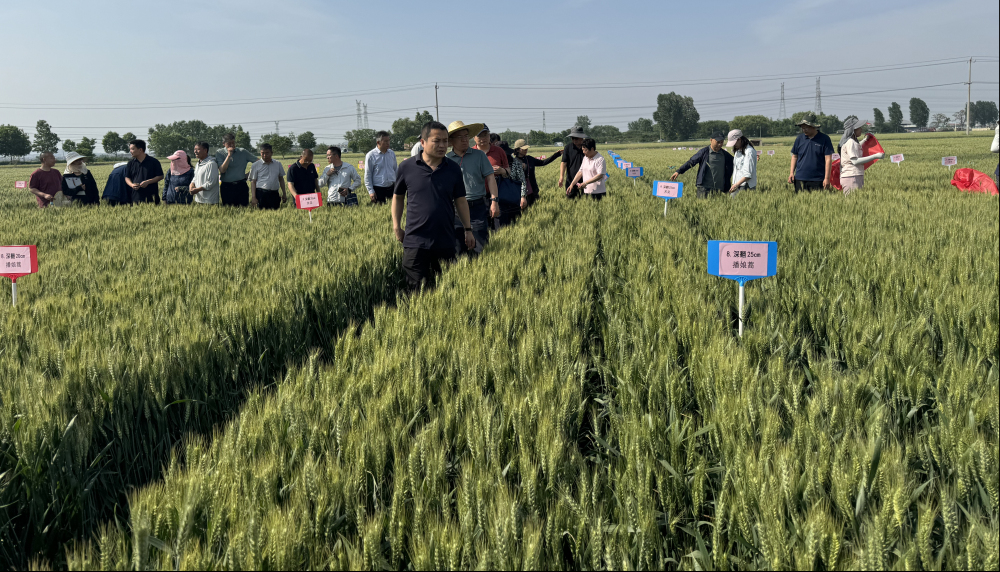
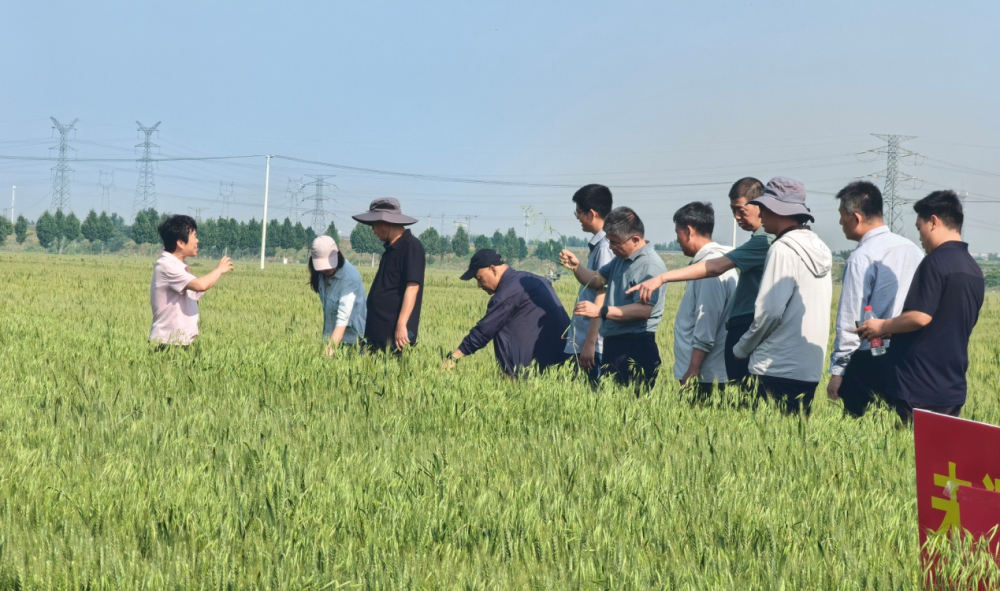
After on-site investigation by the expert team, it was found that plowing to a depth of 20 cm had a control effect of 87.54% on four biennial grass weeds: Aegilops tauschii, Bromus riparius, Alopecurus aequalis, and Avena fatua. The control effects of deep plowing to depths of 25 cm and 30 cm were 95.64% and 99.45%, respectively. However, the control effect on two broadleaf weeds, Descurainia sophia and Capsella bursa-pastoris, was 100% for both treatments. Field demonstration survey results showed that plowing to a depth of 20 cm in the first year achieved a control effect of 85.24% on biennial weeds. In the second year, after deep plowing to depths of 25-30 cm, almost no weeds were visible in the field, indicating a 100% control effect. In practical production, due to perennial rotary tillage, the plowing layer is generally 10-15 cm deep. In the first year, it is necessary to control the depth to around 20 cm to avoid plowing up too much raw soil, which could affect the yield of wheat that year. In the second year, deep plowing to depths of 25-30 cm can achieve efficient control of biennial grass weeds.
The ecological regulation technology system of "no-tillage sowing of corn + deep tillage sowing of wheat" not only effectively controls biennial weeds in wheat fields by reducing the density and biomass of biennial weeds in the later stages of wheat fields and during the corn season, but also buries wheat-corn straw and the pathogens carried by the straw, as well as overwintering insect eggs on the soil surface. It also effectively controls wheat basal stem rot, a major new disease listed as one of China's top ten industrial technology challenges by the China Association for Science and Technology in 2022, reduces the base number of other pests and diseases, and achieves significant pesticide reduction and pest control. According to preliminary statistics, herbicide use can be reduced by 64.71%.
This simplified technology for optimized farming methods systematically addresses 4 technical challenges in the major technical needs for planting industry issued by the National Agricultural Technology Extension and Service Center in 2025: malignant grass weeds in wheat fields, wheat basal stem rot, poor seeding and emergence quality of the next wheat crop due to returning corn straw to the field, and the aggravation of pests, diseases, and weeds in wheat-corn double cropping areas caused by returning straw to the field. It achieves the goal of reducing pesticide use, controlling pests and diseases, and improving quality and efficiency in wheat-corn double cropping areas. It is recommended to further popularize and apply this technology in central and southern Hebei Province, and demonstrate and promote it in the Huang-Huai-Hai region, including Henan, Shandong, and Anhui.
(Source from www.hebnky.com)